369 Tesla
1.5 Coulomb's Law
Coulomb's law is a quantitative statement about the force between two point charges.
When the linear size of charged bodies is much smaller than the distance separating them, they can be treated as point charges.
Coulomb discovered that the force between two point charges:
- Varies inversely as the square of the distance
- Is directly proportional to the product of charge magnitudes
- Acts along the line joining the two charges
Force Calculation
F = k × |q₁ × q₂| / r²
F = 9 × 10⁹ × |5 × 10⁻⁶ × -5 × 10⁻⁶| / (2.0)²
F = 0.00 × 10⁻³ N
No force
Field lines show the path a positive test charge would follow in the electric field. Lines start from positive charges and end at negative charges.
Adjust Parameters
3D Visualization Guide
- Red sphere: Positive charge
- Teal sphere: Negative charge
- Colored arrows: Field strength
The 3D view helps visualize how electric fields extend in all directions around charges, creating a complete spatial understanding of Coulomb's Law.
Historical Context
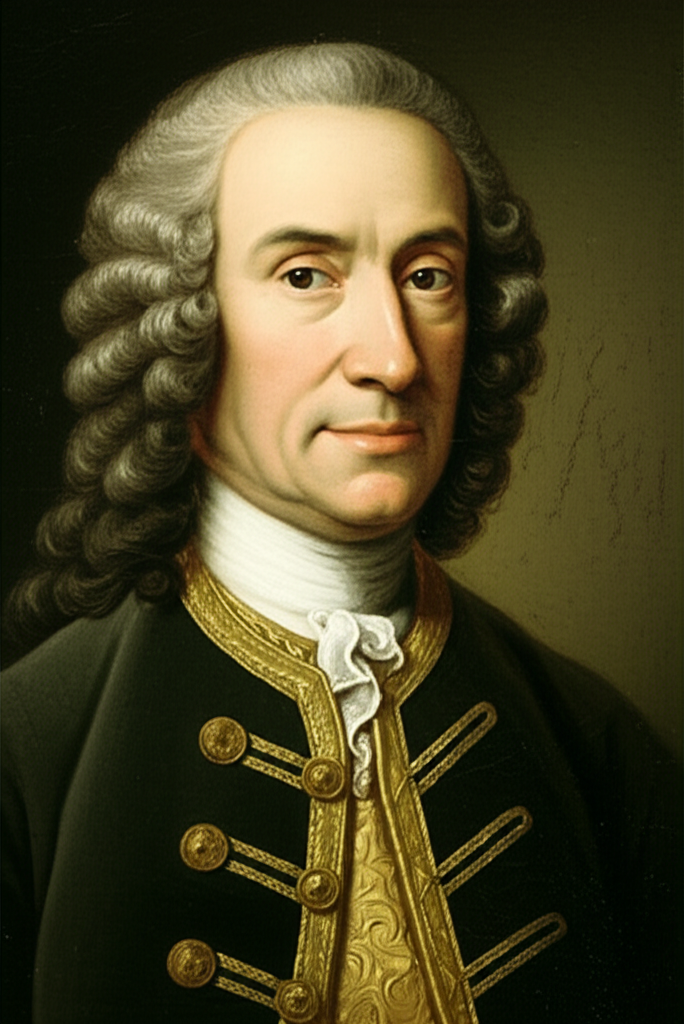
Coulomb began his career as a military engineer in the West Indies. In 1776, he returned to Paris and retired to a small estate to do his scientific research.
He invented a torsion balance to measure the quantity of a force and used it to determine forces of electric attraction or repulsion between small charged spheres.
In 1785, he arrived at the inverse square law relation, now known as Coulomb's law. The law had been anticipated by Priestley and also by Cavendish earlier, though Cavendish never published his results.
Coulomb used a torsion balance for measuring the force between two charged metallic spheres.
When the separation between two spheres is much larger than the radius of each sphere, the charged spheres may be regarded as point charges.
By varying the distance for a fixed pair of charges and measuring the force, then varying the charges in pairs while keeping the distance fixed, Coulomb arrived at his famous inverse square law relation.
Mathematical Explanation
The Mathematical Statement
If two point charges q₁, q₂ are separated by a distance r in vacuum, the magnitude of the force (F) between them is given by:
F = k · |q₁ · q₂| / r²
Where:
- F is the magnitude of the electrostatic force between the charges (in newtons, N)
- q₁, q₂ are the magnitudes of the charges (in coulombs, C)
- r is the distance between the charges (in meters, m)
- k is the electrostatic constant, k = 9 × 10⁹ N·m²/C²
Alternative Form with Permittivity
The constant k is usually written as k = 1/4πε₀, so Coulomb's law becomes:
F = (1/4πε₀) · |q₁ · q₂| / r²
Where ε₀ is the permittivity of free space: ε₀ = 8.854 × 10⁻¹² C²/N·m²
Vector Form
Since force is a vector, Coulomb's law in vector notation is:
F₂₁ = (1/4πε₀) · (q₁q₂/r²₂₁) · r̂₂₁
Where:
- F₂₁ is the force on charge q₂ due to charge q₁
- r₂₁ is the distance from q₁ to q₂
- r̂₂₁ is the unit vector pointing from q₁ to q₂
Examples and Applications
Problem Statement
Compare the strength of electrostatic and gravitational forces by determining the ratio of their magnitudes for:
- An electron and a proton
- Two protons
Given Information
- Proton mass (mp) = 1.67 × 10⁻²⁷ kg
- Electron mass (me) = 9.11 × 10⁻³¹ kg
- Elementary charge (e) = 1.6 × 10⁻¹⁹ C
- Gravitational constant (G) = 6.67 × 10⁻¹¹ N·m²/kg²
- Coulomb constant (k) = 9 × 10⁹ N·m²/C²
Solution
The electric force between an electron and a proton at a distance r apart is:
Fe = k·|e·e|/r² = k·e²/r²
The gravitational force between them is:
FG = G·mp·me/r²
The ratio of these forces is:
Fe/FG = k·e²/(G·mp·me)
Substituting the values:
Fe/FG = 2.4 × 1039
For two protons, the ratio is:
Fe/FG = 1.3 × 1036
Conclusion
The electrostatic force is enormously stronger than the gravitational force between elementary particles.
For two protons inside a nucleus (distance ~10-15 m), the electrostatic force is about 230 N, while the gravitational force is only about 1.9 × 10⁻³⁴ N.